

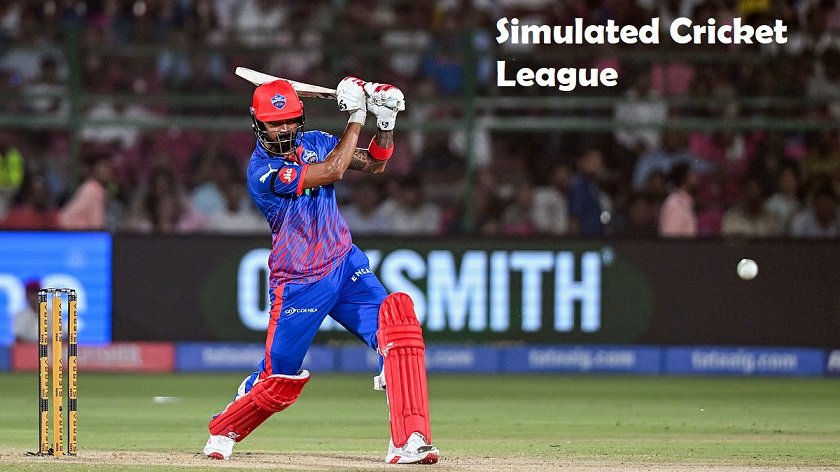
Introduction to Simulated Cricket League
Cricket has traditionally been a sport played through actual teams and players on physical grounds. However, advances in computing, sports analytics, synthetic intelligence, portraits, and statistical modelling have created some other shape of cricket entertainment: the simulated cricket league.
A simulated cricket league is a digitally generated cricket competition in which matches are produced by way of a computer-based simulation in place of being played through actual cricketers on a physical field. Depending on the platform, the simulation might also use historical participant facts, team scores, chance factors, programmed suit rules, or a dedicated cricket recreation engine.
The specific era isn’t always identical throughout each platform. Some cricket simulators are designed as management or simulation video games, while others generate virtual suits for continuous leisure. For example, present-day cricket simulation games can allow users to construct groups, participate in tournaments, and simulate complete seasons.
Because the time period Simulated Cricket League is used for several specific types of virtual cricket merchandise, it’s crucial to recognize the format truly way earlier than deciphering its scores, statistics, or consequences.
What Is a Simulated Cricket League?
A simulated cricket league is a digital cricket competition created using a computer software program.
Instead of eleven actual gamers competing against another 11 gamers, a pc software determines what happens throughout the match in step with its programmed policies and statistical model.
A usual simulation may include:
- Virtual teams
- Batting and bowling rankings
- Player information
- Match situations
- Probability calculations
- Cricket regulations
- Tournament schedules
- Simulated scorecards
- League tables
- Match results
Some systems use real-world participant names and ancient facts, while others use completely fictional players and groups. Therefore, users must constantly test the guidelines and technique of the precise simulation they are using.
A useful example is an ancient statistics game consisting of Play 16-0, which makes use of participant-season facts from Indian T20 league cricket and then simulates results based totally on its own recreation method. Its website explicitly states that its scorecards, standings, and outcomes are sport outputs instead of official cricket records.
How Does Simulated Cricket League Work?
The primary system is especially simple, although the software program behind it may be complex.
1. Player and Team Data
The simulation first requires statistics about teams and players. Depending on the platform, this can encompass batting averages, strike rates, bowling averages, financial system prices, wickets, runs, player roles, and different overall performance statistics.
Historical records can be used to create ratings for players and teams. However, historical facts do no longer assure that a simulated end result will reproduce what would have taken place in a real match.
2. Player Ratings
The software can also assign numerical rankings to extraordinary aspects of a participant’s performance.
For example, a batting version could include:
- Batting potential
- Strike price
- Consistency
- Power-hitting
- Performance towards particular bowling kinds
A bowling model should consider:
- Bowling effectiveness
- Economy price
- Wicket-taking capacity
- Pace or spin
- Match situations
The importance given to each component depends on the individual simulation engine.
3. Match Simulation
Once the groups are selected, the laptop runs the simulation using its programmed policies and chances.
The simulation can also calculate outcomes, which include:
- Runs
- Boundaries
- Dot balls
- Wickets
- Extras
- Overs
- Partnerships
- Bowling figures
- Final ratings
The result is then displayed as a virtual scorecard or match summary.
4. League Standings
If the simulation is designed as a league, multiple digital suits can be performed.
The results can then be used to create a points table containing statistics which include:
| League Information | Description |
|---|---|
| Matches Played | Number of simulated matches completed |
| Wins | Simulated matches won |
| Losses | Simulated matches lost |
| No Result | Matches without a completed result |
| Points | Points awarded according to the simulation’s rules |
| Net Run Rate | May be calculated if the platform supports it |
| Position | Team’s place in the simulated standings |
These standings must be regarded as a part of the simulation in preference to professional cricket records.
Technology Behind Simulated Cricket
The era used by simulated cricket structures can vary significantly.
Some cricket simulation structures use statistical models, even as others use recreation engines and programmed synthetic intelligence.
A simulation can use historical statistics to estimate the probability of specific events. For instance, a batter with a robust historical scoring document may additionally acquire a better batting rating than a player with a weaker document.
Modern cricket simulation initiatives can also offer specific data and unique playing modes. One modern cricket simulator, for example, advertises T20, ODI and Test codecs, tournaments, saved facts, consumer-versus-consumer matches, user-as opposed to AI matches, and AI-as opposed to AI matches.
The critical factor is that there’s no single familiar simulated cricket set of rules. Two platforms can use the identical real-world global participant information and still produce specific outcomes because their models, scores, regulations, and randomisation structures may be distinct.
Simulated Cricket League vs Real Cricket
The biggest distinction is plain: real cricket involves human players physically competing, while simulated cricket is generated digitally.
| Feature | Real Cricket | Simulated Cricket League |
|---|---|---|
| Players | Real people | Digital/virtual representation |
| Venue | Physical stadium | Digital environment or simulation |
| Result | Determined on the field | Determined by software |
| Weather | Actual conditions | May be modelled or ignored |
| Player decisions | Human decisions | Programmed or simulated decisions |
| Injuries | Possible in real matches | Usually depends on game rules |
| Statistics | Official sporting records | Simulation-generated statistics |
| Match timing | Based on real schedule | Can often be generated quickly |
| Tournament | Official competition | Virtual competition |
| Result status | Official when sanctioned | Not an official cricket result |
This distinction is especially vital when reading online articles or social media posts that use phrases including “live rating,” “healthy result,” or “league desk.”
A simulated rating should no longer be robotically confused with the rating of an authentic cricket match.
Simulated Cricket League vs Fantasy Cricket
Simulated cricket and fantasy cricket are also unique standards.
In fantasy cricket, users generally create a fantasy crew using real players and acquire points based totally on those players’ performances in real matches.
In a simulation, the pc itself generates the in-game outcome.
| Aspect | Simulated Cricket | Fantasy Cricket |
|---|---|---|
| Main concept | Computer-generated match | User-created fantasy team |
| Real match required | Not necessarily | Usually based on a real match |
| Player performance | Generated by simulation | Comes from real match statistics |
| User role | May manage or select teams | Selects fantasy players |
| Result | Simulation output | Fantasy points |
| Main purpose | Simulation/game/entertainment | Fantasy competition |
Some systems combine factors of each idea, so users need to examine the platform’s guidelines cautiously.
What Is Simulated Reality League Cricket?
Simulated Reality League (SRL) is a term generally used for digitally generated sports competitions.
In cricket, SRL generally refers to computer-generated cricket fixtures that can be provided as a virtual carrying event. Some SRL products have been designed to perform independently of the real cricket calendar, allowing matches to be generated even when no real cricket fit is taking place.
Historical descriptions of SRL provide an explanation for how the idea makes use of laptop-generated cricket occasions and statistical data to create digital fits.
However, the term SRL does not describe one well-known product. Different companies can implement simulated cricket in extraordinary ways.
Why Do People Use Simulated Cricket?
There are several motives why simulated cricket has attracted interest.
Entertainment
A simulation can provide a cricket revel without requiring an actual match to be scheduled.
Team-Building Games
Some cricket simulators permit users to create teams, select players, manipulate squads, and run tournaments.
Statistical Experiments
Simulation may be beneficial for exploring hypothetical cricket situations.
For instance, a user may want to ask:
- What happens if historic groups meet?
- How might a selected XI carry out?
- Which players match a specific team approach?
- What would a tournament possibly look like underneath a selected set of regulations?
The results stay simulations in place of predictions of what might really manifest.
Learning Cricket Strategy
Some cricket management simulators can help users recognize standards including:
- Squad stability
- Batting order
- Bowling combinations
- Player roles
- Team selection
- Tournament shape
Important Limitations of Simulated Cricket
Simulated cricket can be exciting, but customers should understand its boundaries.
A Simulation Is Not a Prediction
A simulated result does not imply the same result could show up in an actual match.
Real cricket includes heaps of unpredictable variables. A participant’s self-assurance, pitch behaviour, climate adjustments, injuries, fielding errors, tactical selections, umpiring selections, and many other factors can impact a real match.
A laptop version can display the information and rules on its screen.
Different Platforms Can Produce Different Results
There is not any unmarried general for simulated cricket.
Two one-of-a-kind simulation engines can generate one-of-a-kind consequences from the identical groups.
This can occur because they use one-of-a-kind:
- Player rankings
- Probability fashions
- Match engines
- Data resources
- Randomisation techniques
- Rules
- Team-power calculations
Therefore, one simulation ought to no longer be dealt with as a goal prediction of some other simulation.
Simulation Statistics Are Not Official Records
If a digital player rates a hundred runs in a simulated fit, that does not count as an official global, home, or league century.
Likewise, a simulated team’s win does not affect the real-world standings of an actual cricket competition.
Can Simulated Cricket Be Used for Betting?
Some varieties of simulated cricket have been presented in environments connected with wagering. Historical coverage of SRL has documented simulated cricket being presented alongside having a bet markets.
However, simulated results should no longer be treated as assured results or dependable approaches to make money.
A laptop-generated result is determined in line with the policies and version of the specific device. Even whilst ancient participant facts are used, those statistics do not make the subsequent simulated end result certain.
Anyone thinking about real-cash gambling ought to also take a look at the laws and rules relevant to their area, as these can differ by jurisdiction.
For an informational or gaming revel in, a no-cash simulation is an exceptional proposition: it can be used for enjoyment, crew-building, statistical experiments, or mastering without treating the result as a monetary opportunity.
Advantages of Simulated Cricket League
The format gives several advantages for cricket lovers and recreation builders.
Fast Matches
A laptop can simulate a suit lots faster than waiting for an actual cricket fixture.
Year-Round Entertainment
Simulation does not always depend on the actual cricket calendar.
Historical Matchups
A simulation can permit users to discover hypothetical contests between gamers or groups from unique intervals.
Team Management
Some structures permit users to draft players, create squads, pick out techniques, and control competitions.
Statistical Analysis
Simulations can offer a thrilling way to test cricket statistics.
Disadvantages of Simulated Cricket
There are also obstacles.
- Results depend upon the underlying model.
- Different structures can produce one-of-a-kind effects.
- Virtual records are not legitimate cricket information.
- Simulations can’t reproduce every actual international factor.
- Users may additionally misunderstand a virtual end result as an actual winning result.
- Betting-related variations can contain monetary risk.
- Historical information does not assure destiny or simulated outcomes.
How to Evaluate a Simulated Cricket Platform
If you are exploring a simulated cricket league or cricket simulation recreation, take a look at the subsequent records before the usage of it:
| Check | Why It Matters |
|---|---|
| Data Source | Shows where player and team information comes from |
| Simulation Method | Explains how results are generated |
| Player Ratings | Helps explain differences between players |
| Match Rules | Shows how the virtual match is conducted |
| Result Transparency | Helps users understand the generated outcome |
| Official Status | Confirms whether results are official or purely virtual |
| Real-Money Features | Important for understanding financial risk |
| Age Requirements | Some services may have age restrictions |
| Local Laws | Regulations can differ by country or state |
| Privacy Policy | Explains how user information is handled |
Are Simulated Cricket Results Real?
No. A simulated cricket result is a PC-generated result.
It may be based on actual cricket statistics; however, the match itself did no longer appear on a physical cricket ground.
For example, if a simulation reports that Team A defeated Team B by means of 5 wickets, that result belongs to the virtual competition. It ought to no longer be said to be a reputable cricket result unless an actual match sincerely took place.
Some modern simulation games make this difference explicit. Play 16-0, for instance, describes its scorecards and standings as game outputs in place of legit cricket records.
Future of Simulated Cricket League
The destiny of simulated cricket is closely linked with enhancements in sports facts, artificial intelligence, pics, gaming engines, and interactive leisure.
More advanced systems can potentially provide:
- Detailed player fashions
- Improved game engines
- Realistic digital stadiums
- Interactive group control
- Historical tournaments
- Custom competitions
- User-as opposed to-consumer leagues
- AI-versus-AI suits
- Detailed facts
- Tournament simulations
Recent cricket simulation projects already reveal that the format can encompass more than one cricket format, tournaments, statistics, online play, and delusion or league features.
At the same time, a better era does not remove the essential distinction between simulation and fact. A fairly practical digital suit continues to be a computer-generated occasion.
Frequently Asked Questions About Simulated Cricket League
What is a simulated cricket league?
A simulated cricket league is a virtual cricket competition in which laptop software generates matches, player performances, ratings, and results in keeping with a defined simulation model.
Is simulated cricket real cricket?
No. Simulated cricket is digitally generated. It can use real participant statistics, but the simulated match itself isn’t always an authentic actual global cricket match.
How are simulated cricket results generated?
Results can be generated using statistical methods, player ratings, programmed policies, probability calculations, sports engines, or mixtures of those techniques. The exact method depends on the platform.
Is simulated cricket the same as fantasy cricket?
No. Fantasy cricket commonly includes selecting real players and receiving points primarily based on their performances in actual suits. Simulated cricket generates a digital suit via a software program.
Can simulated cricket be expected to reflect real results?
It can be used to explore hypothetical results, but a simulation needs to be treated as a hypothetical scenario, not a guaranteed prediction of an actual cricket match.
Is simulated cricket information legit?
No. Statistics produced by a simulation are generally facts of that digital sport or competition, not legitimate cricket information.
Can I create my own simulated cricket league?
Yes, depending on the software program. Some cricket simulators permit users to create groups, tournaments, leagues, and custom competitions. The capabilities to be had rely upon the specific simulator.
Does each simulated cricket league use AI?
No. The era differs between platforms. Some systems may additionally use statistical algorithms or conventional recreation-engine common sense, while others may also comprise AI or machine-learning techniques.
Conclusion
The simulated cricket league is a virtual approach to cricket that uses software, statistics, regulations, and simulation engines to generate virtual matches and competitions. It can be used for amusement, cricket management games, statistical experiments, historical eventualities, and interactive sports activity experiences.
The most important factor to remember is that simulated cricket and actual cricket aren’t equal. A virtual scorecard can appear similar to a real scorecard; however, its end result is generated by software in place of being produced with the aid of gamers competing on a physical subject.
Different simulation structures additionally use specific strategies, so their consequences may also vary. Historical facts can make a simulation extra records-driven; however, they cannot assure what could happen in either a digital or realsettingy.