

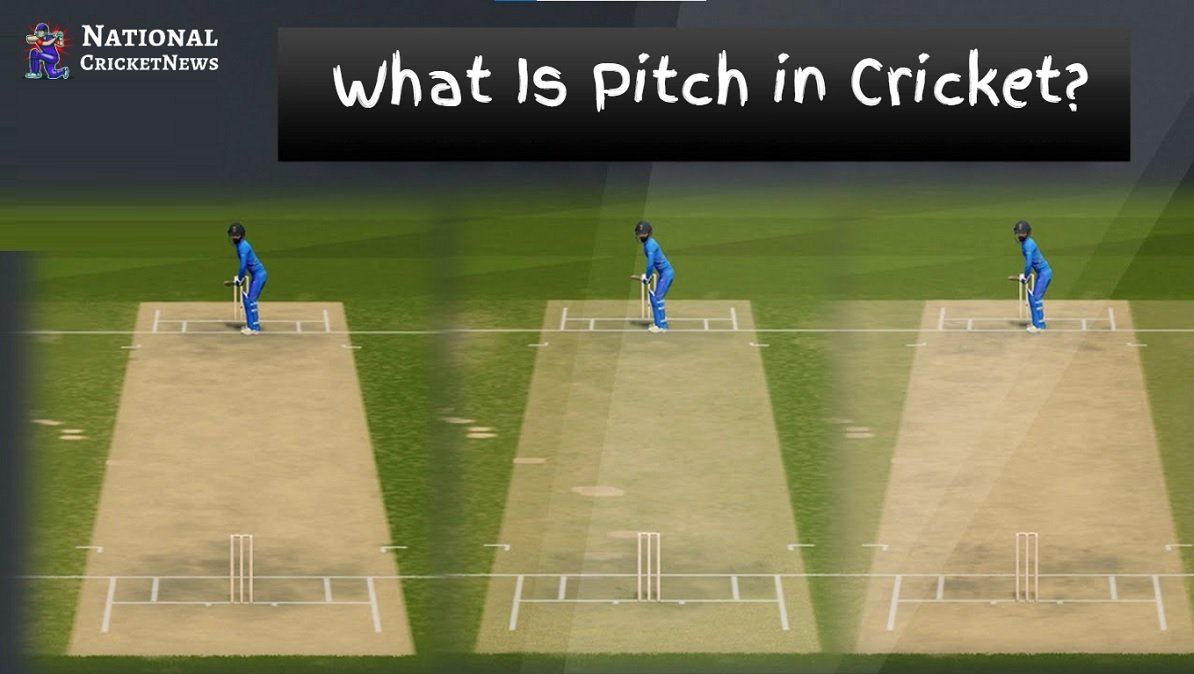
What Is Pitch in Cricket?
Cricket is a recreation deeply prompted through conditions, and amongst all outside factors, the pitch performs the maximum critical function. Whether a healthy will become a excessive-scoring thriller or a low-scoring battle between bowlers and batters frequently depends on one aspect — the cricket pitch. To clearly recognize cricket, one must genuinely recognize What Is Pitch in Cricket?, how it is prepared, and how it influences the sport.
In easy phrases, a pitch in cricket is the rectangular strip of ground within the center of the sector wherein all the principle motion takes vicinity. Every ball is bowled from one quit of the pitch to the opposite, and each run, wicket, jump, and turn originates from it. However, the pitch isn’t simply a bit of land; it is a carefully organized surface which can trade the entire nature of a fit.
In this distinctive manual, you’ll examine:
Table of Contents
This article is designed for college students, beginners, bloggers, myth gamers, and hardcore cricket lovers who need a deep understanding of the subject.
What Is Pitch in Cricket? (Definition)
A cricket pitch is a 22-backyard long (20.12 meters) square region located on the middle of the cricket discipline, where the bowler supplies the ball to the batter. It is made from natural materials including clay, soil, and grass, and it’s far particularly organized to provide a honest contest between bat and ball.
The pitch includes important markings which include:
- Bowling creases
- Popping creases
- Return creases
These markings define where bowlers ought to supply the ball from and wherein batters are taken into consideration secure or out.
In quick, the pitch is the heart of a cricket fit, due to the fact every delivery, run, boundary, and dismissal relies upon on its behavior.
Cricket Pitch Dimensions and Measurements
Understanding the exact measurements of a cricket pitch is crucial for players and enthusiasts alike.
Cricket Pitch Size Table
| Feature | Measurement |
|---|---|
| Total pitch length | 22 yards (20.12 meters) |
| Pitch width | 10 feet (3.05 meters) |
| Distance between bowling creases | 22 yards |
| Popping crease distance | 4 feet in front of bowling crease |
| Return crease length | At least 8 feet 8 inches |
The 22-yard distance is fixed by using the Laws of Cricket, and no expert suit can alter this measurement.
Read More: IPL Popularity: Why the Indian Premier League Is the World’s Most Loved Cricket League
Parts of a Cricket Pitch
A cricket pitch isn’t always a unmarried flat surface; it consists of numerous critical elements, each serving a particular reason.
1. Bowling Crease
This is the road at the back of which the bowler have to deliver the ball. If the bowler crosses it illegally, the delivery is said a no-ball.
2. Popping Crease
This crease allows determine:
- Run-outs
- Stumpings
- Front-foot no-balls
A batter must have a part of the bat or body in the back of this line to be considered secure.
3. Return Crease
These are vertical traces that define the felony area for bowling and batting.
What Is Pitch Made Of?
A cricket pitch is made using a combination of natural substances, carefully layered and rolled to obtain the desired hardness and bounce.
Common Materials Used in Pitch Preparation
| Material | Purpose |
|---|---|
| Clay | Provides hardness and bounce |
| Soil | Maintains structure |
| Grass | Controls pace and swing |
| Sand | Improves drainage |
| Water | Adjusts moisture content |
Different countries use distinctive soil compositions, which is why pitches behave otherwise the world over.
Types of Pitch in Cricket
One of the most critical elements of understanding what is pitch in cricket is understanding the exceptional sorts of pitches. Each pitch kind impacts the game in a unique way.
1. Green Pitch
A green pitch has a seen grass overlaying at the floor. It is commonly discovered in nations like England and New Zealand.
Characteristics of Green Pitch
- Helps speedy bowlers
- Offers swing and seam motion
- Difficult for batters initially
- Low to moderate scoring fits
Green pitches are perfect for Test cricket, where bowlers dominate early classes.
2. Dry Pitch
A dry pitch contains little or no moisture and regularly cracks because the suit progresses.
Characteristics of Dry Pitch
- Favors spin bowlers
- Ball turns sharply
- Becomes slower over the years
- Batting will become difficult later
Dry pitches are common in India, Sri Lanka, and Bangladesh.
3. Flat Pitch
A flat pitch is taken into consideration the maximum batting-friendly floor.
Characteristics of Flat Pitch
- Even bounce
- Minimal movement for bowlers
- High-scoring matches
- Ideal for restrained-overs cricket
Flat pitches are regularly used in ODIs and T20 fits to entertain spectators.
4. Dusty Pitch
A dusty pitch consists of unfastened soil and dust on the floor.
Characteristics of Dusty Pitch
- Extreme spin
- Unpredictable bounce
- Low scoring
- Batting will become very tough
Dusty pitches are frequently seen in subcontinental regions.
Pitch Conditions and Their Impact at the Match
Pitch conditions change due to:
- Weather
- Moisture
- Match duration
- Footmarks created by means of bowlers
How Pitch Conditions Affect the Game
| Pitch Condition | Advantage |
|---|---|
| Moist pitch | Swing bowlers |
| Dry pitch | Spin bowlers |
| Hard pitch | Fast bounce |
| Soft pitch | Slow bowling |
This is why captains carefully look into the pitch earlier than the toss.
Read More: Which Is the Most Expensive Bat in the World? | Costliest Cricket Bats Explained
Role of Pitch in Toss Decision
The toss will become extraordinarily vital because the pitch circumstance changes with time.
- On green pitches, teams favor to bowl first
- On dry pitches, groups frequently pick out to bat first
- In Test matches, pitch deterioration performs a big position
A top toss choice can determine the outcome of a in shape.
Difference Between Pitch and Ground
Many beginners confuse the pitch with the ground. However, they are not the same.
Pitch vs Ground Table
| Aspect | Pitch | Ground |
|---|---|---|
| Area | Central strip | Entire field |
| Size | 22 yards | Varies |
| Function | Main playing surface | Fielding area |
| Material | Clay & grass | Grass |
The pitch is just a small however important element of the whole ground.
Pitch Preparation Process
Preparing a cricket pitch is a scientific and time-consuming technique.
Steps Involved in Pitch Preparation
- Soil choice
- Laying base layers
- Rolling for hardness
- Grass trimming
- Moisture manage
Curators modify pitch conduct primarily based on fit format.
Pitch Behavior in Different Formats
Test Cricket
- Pitch evolves over five days
- Supports bowlers and batters at distinct tiers
- Cracks and footmarks seem
ODI Cricket
- Balanced pitch
- Supports stroke play
- Moderate assistance to bowlers
T20 Cricket
- Flat pitch
- High run prices
- Entertainment-focused surfaces
Famous Pitch Types Around the World
| Country | Pitch Nature |
|---|---|
| India | Spin-friendly |
| Australia | Hard & bouncy |
| England | Green & swinging |
| South Africa | Fast & lively |
| New Zealand | Seam-friendly |
Each us of a has a completely unique pitch identification.
Why Pitch Is Called the Soul of Cricket
The pitch determines:
- Match end result
- Team choice
- Bowling approach
- Batting technique
A desirable pitch ensures truthful opposition, at the same time as an excessive pitch can dominate one facet unfairly.
Frequently Asked Questions About Pitch in Cricket
What is pitch in cricket in simple words?
A pitch is the central strip wherein bowling and batting take region.
How lengthy is a cricket pitch?
A cricket pitch is 22 yards long.
Which pitch is first-rate for batting?
A flat pitch is first-class for batting.
Which pitch facilitates spinners?
Dry and dusty pitches assist spinners the maximum.
Conclusion
Understanding what is pitch in cricket is essential to truely appreciate the sport. The pitch isn’t only a gambling floor; it’s miles a living element that adjustments with time, climate, and usage. From supporting speedy bowlers swing the ball to allowing spinners to dominate, the pitch comes to a decision the rhythm and end result of a in shape.
Whether you are a amateur getting to know cricket fundamentals or a fan trying to research match situations, knowing the pitch gives you a deeper and smarter information of the sport.